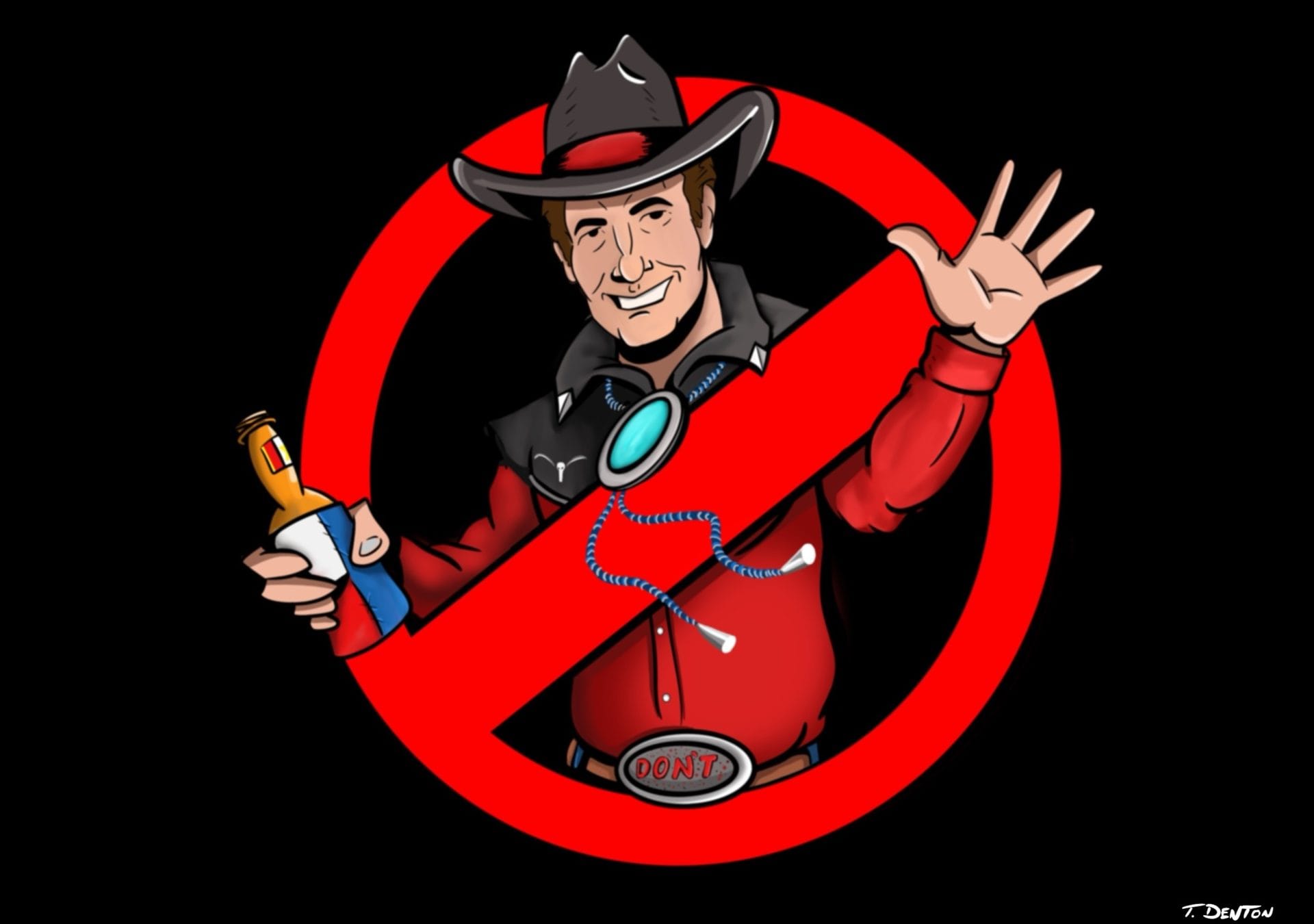
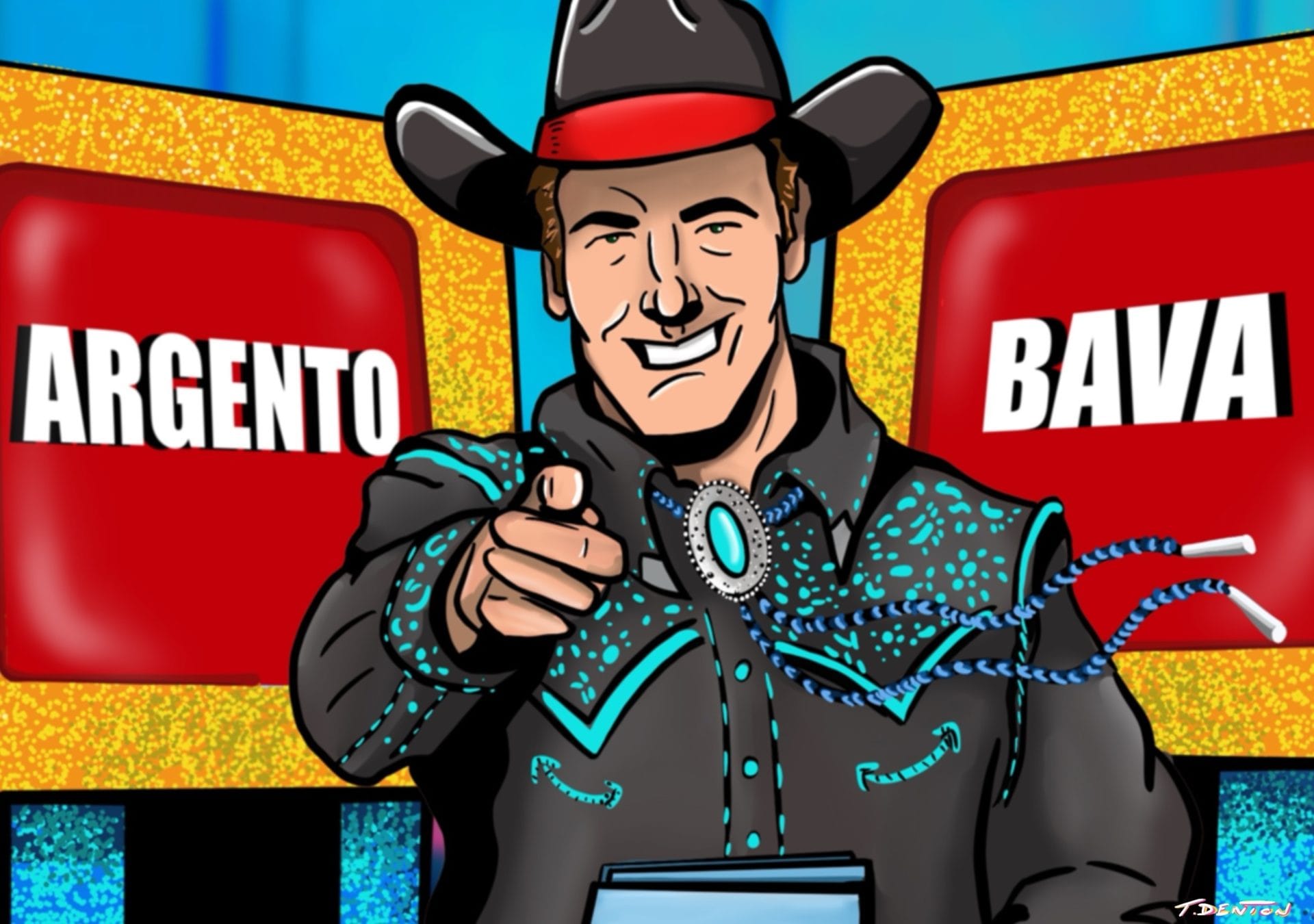
Art by T.J. Denton (@TDenton_1138 on Twitter,shop on Etsy)
Mute Witness
Joe Bob began the night with a salute to actors — aka his opening rant — exploring the concept of actors as truth tellers. The best actors, he said, find a way to present their role and lines in a truthful way.
The rant’s inspiration was the actor featured in the first film: Alec Guinness, a great actor who wasn’t a movie star, because he was different in every role. JB claimed that the night’s first feature was full of good actors, which was one of the many reasons Mute Witness is an excellent film.
But before he told more about the fine qualities of this film, Darcy wanted to know the theme of the night. Joe Bob said it was Survival Night, because each film kept the audience wondering which characters would survive to the end of the film.
Darcy pointed out that this would be true of every film they showed, and he acknowledged that she was correct. Still, the theme of Survival worked well for both films though each explored the idea in different ways.
As Joe Bob described the production challenges of making Mute Witness, it became obvious that survival was truly a questionable proposition for cast and crew.
Writer/director Joseph Waller originally planned to make the film in Chicago, but since it was the early 1990s, filming in Russia would be much more economical. Because of the recent fall of the Soviet Union, the film could be made there for $1 million rather than $10 million.
Actually, there were additional hidden costs — “If you know what I mean, and I think you do.”
Just in case you didn’t know, JB explained the difference in filming costs: the Soviet film industry had been state-sponsored, and when the government fell, it took the studios and studio jobs with it. Not only were the studio sets cheap to rent, but actors were working cheaply as well. But making a film in Russia also meant dealing with the Russian Mob. That was not so cheap.
Waller needed to import modern technical equipment, and getting it off the boat (or plane) required paying a lot of bribe money. (Joe Bob demonstrated techniques for palming cash from one hand to another, a useful skill in such occasions.) The Russian Mafia also required them to pay protection money throughout the shoot.
That was just the beginning of the hazards of filming in Russia in the early 1990s. There was a diphtheria outbreak. While they filmed in Moscow, there was an attempted coup. Perhaps the most miserable hazard they faced was temperatures colder than twenty below (Fahrenheit, of course).
Waller was up to the challenge.
When he was told it would cost $300,000 to film in Red Square, he resorted to a hidden camera to get his shot. He cast a Russian actress, Marina Zudina, who didn’t speak English. It was rather helpful that her character was mute. (Has anyone else ever played an American who couldn’t speak English?)
Perhaps the most creative bit of gonzo filmmaking came with the casting of Alec Guinness. Waller met Sir Alec after he gave a speech years before production began; Waller complimented the famed actor on his support of new filmmakers and then asked if Guinness could play a bit part in his new film.
Guinness told him the only free time he would have for months was the next day. Waller told him that would work.
Waller didn’t actually have a film in production, but he wrote a scene that night that Guinness performed the next day. Waller edited that scene into this film five years later.
The cast and crew, Russian and otherwise, did survive the whole shoot and made a great low budget film that was later featured in some film festivals. Waller didn’t manage to get a lucrative distribution deal with an American studio but the film has gained an appreciative audience since its release.
As for those Drive-In Totals:
The Final Terror
How did this second feature qualify for Survivor Night?
It’s a slasher film, so there’s always a question of who would die. (Actually, a surprising number of the characters survive.)
It’s a film that takes place in the American woods, and Joe Bob had begun the night thanking the United States Park Service and the current administration for cutting budgets, thereby making our National Parks once again hospitable to serial killers.
This film asked very different questions about survival than Mute Witness did, including the question of survival for the actors’ careers. The film isn’t critically lauded (it currently rates a Critic’s Score of 33% at Rotten Tomatoes and an Audience Score of 26%), but a surprising number of the cast members had bright futures ahead. There’s Daryl Hannah before she was a mermaid in Splash or a replicant in Blade Runner, Joey Pants before he was a slimy guy in The Matrix and Memento, Rachel Ward before she was the femme fatale in Sharkey’s Machine and Against All Odds. And there’s Adrian Zmed before… um… Grease 2 and T.J. Hooker. (So, maybe this was a career highlight for Adrian.)
The other question of survival in The Final Terror was how many audience members would last through the film. Joe Bob didn’t sound enthusiastic about the film, and even Darcy didn’t sound too pumped.
So why were they showing the film? Because it was a favorite of writer C. Robert Cargill (Sinister, The Black Phone).
Since Cargill was willing to be a guest for the evening, much of the entertainment came from having this horror entrepreneur and co-host of the Junkfood Cinema podcast explain why he thought The Final Terror was a worthy entry in the line of slasher classics.
So, what were Joe Bob’s Drive-In Totals?